
Delhi to Jibhi Trip: Route, Budget & Places to Visit
Plan a Delhi to Jibhi trip with route details, distance, travel options, a 2–3 day itinerary, estimated budget and nearby attractions.
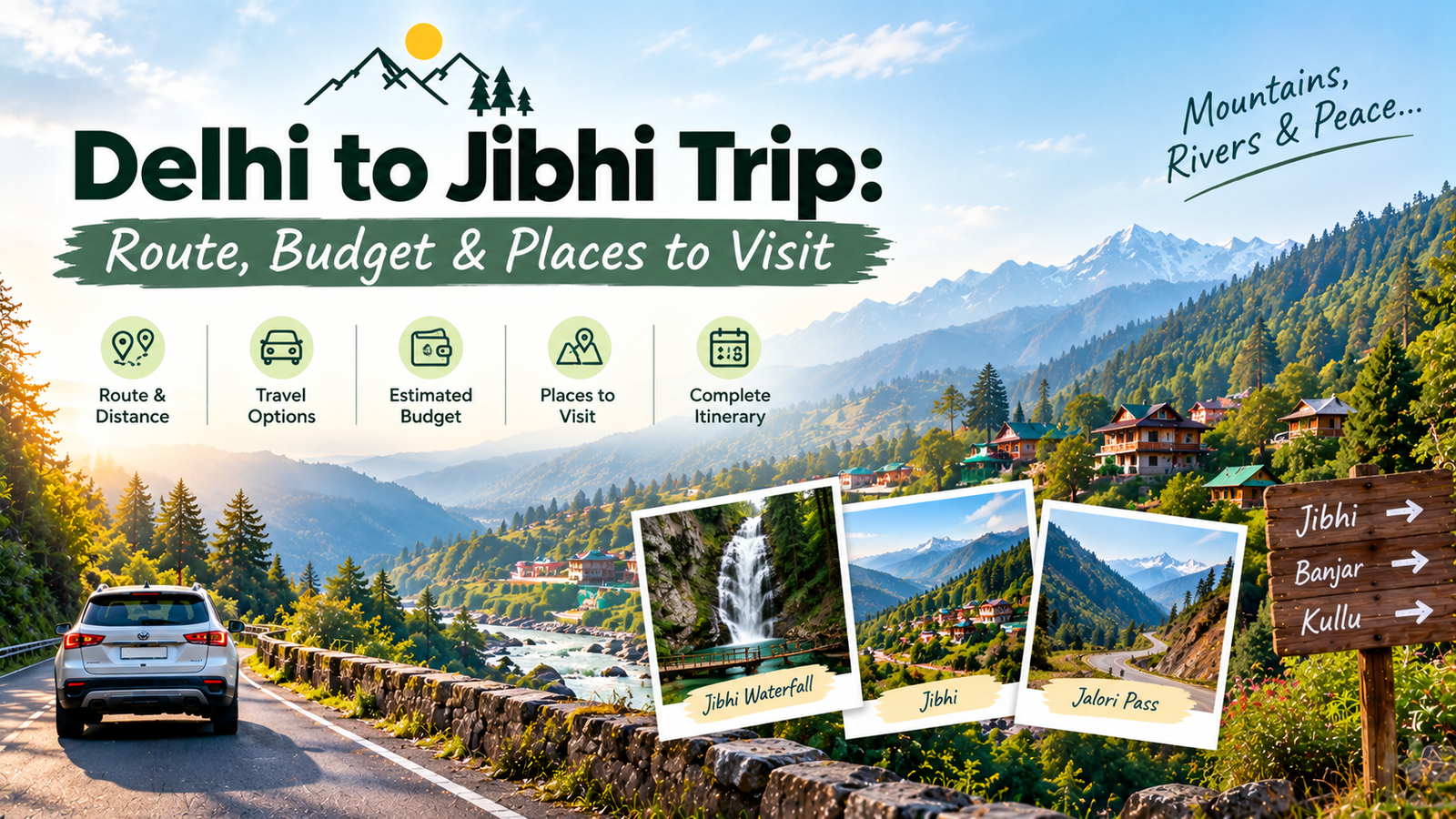
Delhi to Jibhi Trip: Route, Budget & Places to Visit
Planning a Delhi to Jibhi trip? Jibhi is a peaceful mountain destination in Himachal Pradesh, known for its wooden cottages, forest trails, flowing streams and scenic mountain views. It is a good choice for travellers who want a break from the busy routine of Delhi NCR and prefer a quieter mountain getaway.
Located in the Banjar Valley of Kullu district, Jibhi is ideal for couples, friends, solo travellers and small groups. You can spend your time exploring Jibhi Waterfall, visiting nearby villages, enjoying riverside cafés or taking a day trip towards Jalori Pass and Serolsar Lake.
The journey from Delhi takes around 11–14 hours by road, depending on traffic, weather and stops. For a short trip, many travellers prefer an overnight bus to Aut followed by a local taxi to Jibhi.
This guide covers the Delhi to Jibhi route, distance, travel options, estimated trip budget, places to visit and a practical itinerary to help you plan your trip.
Delhi to Jibhi Trip: Quick Overview
| Travel Detail | Information |
| Destination | Jibhi, Himachal Pradesh |
| Distance from Delhi | Approximately 480–520 km by road, depending on the starting point and route |
| Driving time | Around 11–14 hours, excluding longer breaks |
| Best route | Delhi – Chandigarh – Bilaspur – Mandi – Aut – Banjar – Jibhi |
| Best duration | 2–3 days |
| Nearest major airport | Kullu-Manali Airport, Bhuntar |
| Nearest major railway station | Chandigarh |
| Best travel options | Self-drive, private taxi or overnight bus |
| Best time to visit | March–June and September–November |
| Estimated budget | ₹4,000–₹9,000 per person for a 2-day/1-night trip |
Distance, travel time and costs are approximate. Check road conditions, transport schedules and accommodation prices before departure.
How Far Is Jibhi from Delhi?
The Delhi to Jibhi distance is approximately 480–520 km by road, depending on your starting point in Delhi NCR and the route taken.
The journey begins on the plains of northern India and gradually enters the mountain roads of Himachal Pradesh. The final stretch through Aut, Banjar and Jibhi has winding roads, forested slopes and valley views.
Plan for around 11–14 hours of driving, including normal traffic variations and short breaks. Heavy traffic, road repairs, rain or snowfall can increase the journey time.
If you are travelling for just two days, consider leaving Delhi the previous evening by overnight bus or adding an extra night to your trip. This gives you more time to explore Jibhi instead of spending most of your holiday travelling.
Best Route from Delhi to Jibhi
The most practical road route is via Chandigarh, Bilaspur, Mandi and Aut.
Recommended route:
Delhi → Panipat → Ambala → Chandigarh → Kiratpur Sahib → Bilaspur → Sundernagar → Mandi → Aut → Banjar → Jibhi
The journey follows major highways through the plains before continuing along mountain roads towards the Banjar Valley.
Major stops on the route
1. Chandigarh
Chandigarh is a convenient stop for breakfast, fuel and refreshments. If you are driving from Delhi, it is a useful place to take a break before continuing towards the hills.
2. Bilaspur
Bilaspur is a practical stop for food and a short rest. The surrounding region also offers views of the Gobind Sagar reservoir, depending on the route and stopping point.
3. Mandi
Mandi is one of the major towns along the route. You can stop here for lunch, refreshments and fuel before continuing towards Aut.
4. Aut
Aut is an important junction for travellers heading towards the Banjar Valley. From here, continue towards Banjar and Jibhi rather than simply following the main highway towards Manali.
5. Banjar
Banjar is the main town serving the surrounding valley. You can arrange local transport and purchase basic supplies here before continuing to Jibhi.
Is the road to Jibhi suitable for a car?
Yes, Jibhi is accessible by road, but the final mountain stretch is narrower and more winding than the highway sections. Drive slowly, keep to your side on blind bends and avoid unnecessary overtaking.
If you are unfamiliar with mountain driving, consider taking an experienced local driver. During winter or heavy rain, check the latest road conditions before starting the journey.
How to Reach Jibhi from Delhi
You can reach Jibhi by car, bus or a combination of air and road travel. Your best option depends on your budget, available time and comfort preferences.
1. Delhi to Jibhi by car
Driving is a good option if you want flexibility and plan to explore nearby places such as Banjar, Shoja and Jalori Pass.
- Distance: Approximately 480–520 km.
- Travel time: Around 11–14 hours, depending on traffic and stops.
- Best for: Friends, families and small groups.
- Advantages: Flexible departure, luggage convenience and easier access to nearby attractions.
Start early if you plan to complete the journey in one day. Avoid driving tired, and try to cover the more winding mountain roads during daylight.
For a relaxed trip, break the journey with a longer stop or stay overnight along the way.
2. Delhi to Jibhi by bus
An overnight bus is often a practical option for budget-conscious travellers.
You can look for buses travelling towards Aut, Banjar, Bhuntar or the wider Kullu-Manali region. Availability and direct services to Jibhi can vary by operator and season, so confirm the actual drop-off point before booking.
From Aut, continue towards Jibhi by local bus or taxi. The onward journey generally takes around one to one-and-a-half hours, depending on the exact pickup point, road conditions and traffic.
Estimated cost:
- Delhi to Aut or a nearby stop: approximately ₹600–₹1,800 one way, depending on the service.
- Shared local transport: approximately ₹200–₹500 per person, where available.
- Private taxi for the onward journey: often around ₹1,000–₹2,500 per vehicle, subject to availability and negotiation.
These are planning estimates rather than fixed fares. Confirm the latest prices, departure time and drop-off location with the operator.
3. Delhi to Jibhi by flight
The nearest airport is Kullu-Manali Airport at Bhuntar. Flights may be limited, and weather can affect schedules.
From Bhuntar, you will need a taxi or other road transport to reach Jibhi. The journey may take around two to three hours or longer, depending on the route and road conditions.
Flying can save time when a suitable service is available, but it is not always the most reliable or economical choice. Keep a buffer in your itinerary in case of delays or cancellations.
4. Delhi to Jibhi by train
There is no railway station in Jibhi. Chandigarh is a useful major railhead, after which you can continue by road.
Another option is to travel by train to a suitable connecting station and arrange onward road transport. Compare the total journey time and transfer costs before booking, as the train itself will not take you directly to Jibhi.
Best Time to Visit Jibhi
Jibhi looks different in every season. The best time depends on whether you prefer pleasant weather, green landscapes, autumn colours or the possibility of snow.
March to June: Pleasant weather and outdoor activities
Spring and early summer are popular for exploring the valley, walking through villages and enjoying the outdoors. The weather is generally more comfortable for sightseeing than during the colder months.
This period works well for first-time visitors who want to combine Jibhi Waterfall, local cafés and nearby villages.
July to September: Green landscapes
The monsoon brings greenery to the valley, but rain can also cause slippery trails, poor visibility and road disruptions.
If you travel during this period, keep your itinerary flexible. Avoid trekking during heavy rain and check local advice before travelling on mountain roads.
October to November: Autumn mountain getaway
Autumn is a good time for travellers who want cooler weather and scenic views. It can be a comfortable season for village walks, photography and exploring the surrounding valley.
Temperatures drop as winter approaches, so pack warm layers, particularly for mornings and evenings.
December to February: Winter and possible snowfall
Winter brings colder temperatures, and snowfall may occur in the surrounding higher areas. However, snow is not guaranteed in Jibhi itself.
Roads leading towards Jalori Pass and other high-altitude areas can be affected by snow or ice. Check local conditions before planning a trip to these places, and do not assume every attraction will remain accessible.
Best Places to Visit in Jibhi
Jibhi is better suited to a relaxed holiday than a packed sightseeing schedule. You can explore the village itself and add nearby attractions depending on the time you have.
1. Jibhi Waterfall
Jibhi Waterfall is one of the best-known attractions in the village. The waterfall is surrounded by trees and natural rock formations, creating a peaceful setting for a short walk and photographs.
The approach involves walking, so wear shoes with a good grip, especially after rain. Avoid climbing onto slippery rocks or entering unsafe water.
Best for: Nature walks, photography and a short sightseeing stop.
2. Jibhi Village
Spend some time walking through Jibhi and noticing its traditional wooden houses, small cafés and mountain scenery.
The village is a good place to slow down after the long journey from Delhi. Instead of trying to cover every nearby attraction, you can enjoy a leisurely breakfast, explore the lanes and spend time in a café overlooking the valley.
Best for: Couples, solo travellers, relaxed holidays and photography.
3. Jalori Pass
Jalori Pass is a high mountain pass near Jibhi and a popular starting point for treks in the region. The drive towards the pass offers forest views and changing mountain landscapes.
The pass is especially useful for travellers who want to add a mountain excursion to their Jibhi itinerary. However, accessibility is seasonal, and heavy snowfall or adverse weather can make the route unsafe or temporarily inaccessible.
Check the latest local road conditions before travelling. Do not plan a visit solely on the assumption that the pass will be open.
Best for: Mountain views, scenic drives and access to nearby hiking routes when conditions permit.
4. Serolsar Lake
Serolsar Lake is a forest lake accessed by a walking trail from the Jalori Pass area. It is a popular excursion for travellers who enjoy hiking and spending time in nature.
Allow enough time for the return walk, and carry water, snacks and suitable footwear. The trail can become slippery after rain or snow, so check conditions before setting out.
If you are visiting in winter, confirm whether the trail is safe and accessible. Do not attempt the hike in poor weather without appropriate preparation.
Best for: Hiking, forest scenery and nature photography.
5. Mini Thailand, Kulhi Katandi
Kulhi Katandi, often promoted online as “Mini Thailand,” is a natural spot in the wider Jibhi region known for its unusual rock formations and water scenery.
The site is often visited for photographs, but conditions and access can change with the season. Follow local guidance, avoid dangerous rock surfaces and do not enter water where currents or depth are uncertain.
Best for: Photography and a short outing, when access is suitable.
6. Chehni Kothi
Chehni Kothi is a traditional tall tower structure in the Banjar Valley, known for its distinctive local architecture and historical character.
Visiting the village offers a chance to see a different side of the region beyond forests and waterfalls. The approach may involve a walk, so plan for suitable footwear and allow extra time.
Be respectful of local residents and treat the structure and surrounding village as a living cultural place rather than just a photo stop.
Best for: Architecture, village exploration and cultural interest.
7. Tirthan Valley
Tirthan Valley is a wider mountain region near Banjar, known for its river landscapes, forested surroundings and quiet villages.
You can spend time beside the river where access is permitted, explore nearby settlements or enjoy the slower pace of the valley. It is a good addition if you have two or three days and want to see more than Jibhi village.
River conditions can change quickly, especially during rain. Stay away from unsafe banks and strong currents.
Best for: Nature lovers, relaxed stays and scenic drives.
8. Shoja Village
Shoja is a small mountain village in the surrounding region, often included in trips towards Jalori Pass.
It offers a quieter setting for travellers who enjoy forest views, mountain air and a break from busy tourist areas. Conditions can be colder here than in lower parts of the valley, so pack accordingly.
Best for: Scenic drives, peaceful stays and nature photography.
Delhi to Jibhi: 2-Day Itinerary
A two-day itinerary works best if you reach Jibhi early on the first day, such as after travelling overnight. If you drive from Delhi on the same morning, you may reach late and have limited time for sightseeing.
Day 1: Arrive in Jibhi and explore the village
Morning
Reach Jibhi, check in to your accommodation and have breakfast. Take some time to rest after the journey rather than immediately starting a long excursion.
Late morning
Visit Jibhi Waterfall and explore the nearby village lanes. Enjoy the wooden architecture, forest surroundings and small cafés.
Afternoon
Have lunch at a local café or restaurant. Spend the afternoon relaxing, taking photographs or exploring nearby spots that are accessible from your accommodation.
Evening
Enjoy the mountain views before sunset. Have dinner and spend the evening at your stay.
Avoid planning too many attractions on the arrival day, especially if you have travelled overnight.
Day 2: Explore the surrounding valley
Morning
Have breakfast and choose an excursion based on weather and road conditions.
If Jalori Pass is accessible, you can head towards the pass and consider the Serolsar Lake trek if you have enough time and the trail is safe.
Afternoon
Return towards the valley for lunch. Alternatively, explore Banjar or visit Chehni Kothi if travel time and access suit your schedule.
Evening
Begin your return journey only if you have planned enough time and are comfortable with the driving conditions. For a more relaxed trip, stay another night and return to Delhi the following day.
Important: If you need to return to Delhi by a fixed time, avoid relying on a same-day mountain excursion followed by a long drive to Delhi. Weather, traffic and road conditions can cause delays.
Delhi to Jibhi: 3-Day Itinerary
If you have three days, you can explore at a slower pace and reduce the pressure to cover multiple places in a short time.
Day 1: Delhi to Jibhi
Travel overnight by bus or drive to Jibhi with suitable breaks. After arrival, check in, rest and explore Jibhi Waterfall and the village.
Spend the evening enjoying the local food and mountain surroundings.
Day 2: Jalori Pass and Serolsar Lake
After breakfast, check local conditions and travel towards Jalori Pass if the route is open.
If conditions permit, take the walking trail to Serolsar Lake. Carry water, snacks and warm clothing, and allow enough time for the return walk.
Return to your accommodation before it gets dark. If the pass or trail is inaccessible, choose a lower-altitude village walk or a relaxed day around Jibhi instead.
Day 3: Banjar Valley and return
Enjoy breakfast and spend the morning exploring a nearby village, visiting Chehni Kothi if practical or relaxing by an accessible part of the valley.
Have lunch, check out and begin your return journey. If you are driving to Delhi, allow sufficient time for the long road journey and avoid rushing through the mountain sections.
Delhi to Jibhi Trip Budget
Your total cost depends on the mode of transport, the number of travellers, accommodation type, season and activities.
The following estimates are for planning purposes, not confirmed prices.
| Expense | Budget Estimate per Person |
| Return bus travel from Delhi and onward local transfers | ₹1,500–₹3,500 |
| One night in a budget homestay or guesthouse | ₹800–₹2,000 |
| Food and refreshments | ₹600–₹1,200 |
| Local transport and sightseeing | ₹500–₹1,500 |
| Miscellaneous expenses | ₹300–₹800 |
| Estimated total for 2 days/1 night | ₹3,700–₹9,000 |
For a couple sharing a room, the per-person accommodation cost may be lower. Private taxis, premium cottages, peak-weekend stays and extra activities can increase the total substantially.
For a self-drive trip, calculate fuel, tolls, parking and any accommodation needed en route separately. Divide shared vehicle expenses among the travellers to estimate the per-person cost.
How to save money on your Jibhi trip
- Travel by overnight bus if the available route and drop-off point suit your plans.
- Book accommodation in advance for weekends and popular holiday periods.
- Share local taxis where practical and confirm fares before starting.
- Choose a stay with food options nearby to reduce unnecessary travel.
- Avoid adding distant attractions to a short itinerary simply to fit in more places.
What to Pack for Jibhi
Mountain weather can change quickly, so pack for the season and your planned activities.
- Comfortable walking shoes with good grip.
- Warm layers, even outside winter.
- A waterproof jacket or rain protection during the monsoon.
- Personal medication and basic first-aid supplies.
- Reusable water bottle and small day bag.
- Power bank and offline maps for areas with patchy connectivity.
- Cash for small local purchases and transport.
- Torch or headlamp if your accommodation is away from the main village.
For winter visits, add warmer clothing, gloves and suitable footwear. If you plan to hike, check the route conditions and carry the equipment appropriate for that trail.
Travel Tips for a Smooth Delhi to Jibhi Trip
1. Plan the final stretch carefully. Roads around Aut, Banjar and Jibhi are winding. Keep enough time for the mountain drive and avoid rushing.
2. Check conditions before visiting Jalori Pass. Snow, rain and road closures can affect access. Verify locally rather than relying only on older online information.
3. Do not overpack your itinerary. Jibhi is best enjoyed at a relaxed pace. Two or three well-planned stops can be more enjoyable than a long list of rushed visits.
4. Keep some cash available. Digital payments may not be accepted everywhere, particularly at smaller establishments.
5. Book accommodation ahead of time. Popular weekends and holiday periods can be busy. Confirm the exact location, parking availability and check-in time before booking.
6. Be careful near rivers and waterfalls. Wet rocks are slippery, and water levels can rise quickly during rain. Stay within safe, permitted areas.
7. Respect the local environment. Avoid littering, keep noise low in residential areas and follow local guidance on trails and natural sites.
Frequently Asked Questions About a Delhi to Jibhi Trip
1. What is the distance from Delhi to Jibhi?
The road distance is approximately 480–520 km, depending on your starting point and route. The drive generally takes around 11–14 hours, excluding extended stops.
2. How many days are enough for Jibhi?
Two days can cover Jibhi village and one nearby excursion if your arrival and departure timings are convenient. Three days offer a more relaxed experience and allow time for places such as Jalori Pass or Serolsar Lake when conditions permit.
3. What is the best way to reach Jibhi from Delhi?
An overnight bus to Aut or a nearby transport hub followed by a local taxi is a practical choice for many budget travellers. Self-driving or hiring a private cab offers more flexibility.
4. What is the best month to visit Jibhi?
March to June is popular for pleasant weather and outdoor exploration. September to November is another good period for mountain views and village walks. Winter can be attractive for cold-weather trips, but snow and road access are not guaranteed.
5. Can I visit Jibhi in winter?
Yes, but temperatures can be low and snow may affect nearby high-altitude roads. Check the latest conditions before travelling towards Jalori Pass or planning a trek.
6. Is Jibhi suitable for a weekend trip from Delhi?
Yes, but the long journey means the trip can feel rushed if you leave Delhi on the first morning and return on the second evening. An overnight bus or an additional night makes the itinerary more practical.
7. Is Jibhi a good destination for couples?
Jibhi can suit couples looking for quiet mountain stays, nature walks and a slower holiday. Choose accommodation based on location, access, amenities and recent reviews.
8. Is the Serolsar Lake trek suitable for everyone?
The trek requires walking on a forest trail and may be difficult in poor weather or for people who are not comfortable with uneven paths. Check current trail conditions and assess your fitness before setting out.
9. Is there an airport in Jibhi?
No. Kullu-Manali Airport at Bhuntar is the nearest airport commonly used by travellers, followed by road transport to Jibhi. Flight availability and weather-related disruptions should be considered.
10. What is the estimated budget for a Delhi to Jibhi trip?
A two-day trip may cost approximately ₹4,000–₹9,000 per person using budget to mid-range options. Premium accommodation, private transport and additional nights can increase the total.
Plan Your Delhi to Jibhi Getaway
A Delhi to Jibhi trip is a good choice if you want to spend a few days among mountain forests, traditional villages and peaceful valley landscapes. The journey is long, but planning your transport and arrival time in advance can make it more comfortable.
For a short holiday, explore Jibhi Waterfall and the village on the first day, then choose a nearby excursion on the second day. If you have three days, you can travel at a more relaxed pace and explore the surrounding Banjar Valley.
Before leaving, confirm transport schedules, accommodation details and current road conditions, particularly if your plans include Jalori Pass or Serolsar Lake. With a flexible itinerary and sensible travel planning, Jibhi can make for a memorable mountain break from Delhi.